Consistent Professional Rides That Build Correct Form
Training in Kingwood for performance horses, young prospects, and riders preparing for advancement in hunter jumper disciplines - Proudly Serving Clients From Humble, TX
Coyote Creek Sporthorses offers structured English training programs with a focus on hunter jumper fundamentals, flatwork, balance, rhythm, and correct form for both horse and rider. You can choose full training at four to six sessions per week, which is ideal for performance horses or young prospects preparing for consistent advancement and competition readiness. Partial training runs two or three sessions per week and works well for horses needing regular professional rides while you remain actively involved. The training schedule is tailored to your horse's age, experience level, temperament, and goals, and every session emphasizes correct muscle development, responsiveness, and long-term soundness.
Full training includes daily turnout, consistent professional handling, and a structured program that builds on previous sessions to create steady progress. Partial training allows you to ride your horse on off days while still benefiting from regular professional input. Maintenance training is available for seasoned horses who need to preserve conditioning, show-ring readiness, and responsiveness between competitions or during lighter riding periods. Each program is designed to reinforce good behavior, correct movement patterns, and a calm, focused mindset under saddle.
If you have a horse that needs professional training or regular rides to stay sharp, reach out to discuss your horse's goals, training schedule, and program availability.
What Training Sessions Include and How Horses Progress
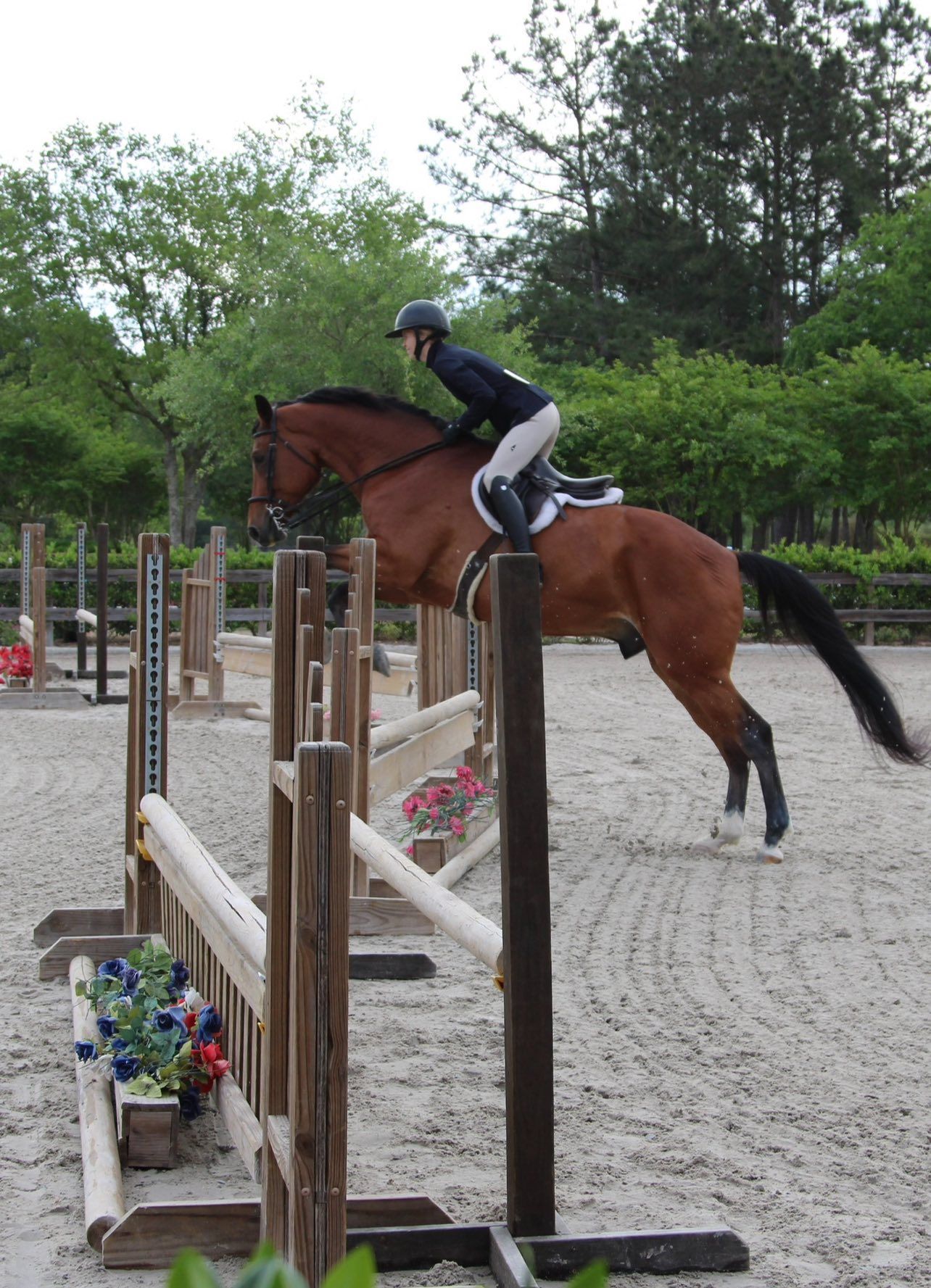
Each session begins with an assessment of how the horse is moving, responding to cues, and carrying itself. Flatwork focuses on rhythm, suppleness, straightness, and engagement, which are the building blocks for correct jumping form and long-term soundness. Horses work through transitions, lateral movements, and exercises that encourage balance and self-carriage. Jumping work is introduced or progressed based on readiness, with attention to approach, takeoff, bascule, and landing mechanics. Sessions are documented so you can see what was worked on and what the next steps are.
After several weeks in full training, most horses show improved balance, smoother gaits, and a more willing attitude under saddle. Young horses become more confident and consistent, while seasoned horses regain or maintain the sharpness needed for competition. Coyote Creek Sporthorses adjusts the training plan as the horse progresses, adding complexity when the horse is ready and backing off when recovery or mental rest is needed. Owners who visit regularly can see the difference in how their horse moves, responds, and carries itself through work.
Training rates are sixty-five dollars per session, and the frequency is set based on the program you choose. Full training is billed monthly based on the number of sessions per week, while partial training is billed similarly at a reduced weekly frequency. Maintenance training is scheduled as needed and billed per session. Training does not include veterinary care, farrier work, or boarding unless those services are arranged separately.
Questions Owners Have Before Starting a Training Program
Here are answers to some of the most common questions about training structure, session frequency, and what you can expect from a professional training program.
What is the difference between full and partial training?
Full training includes four to six sessions per week and is designed for horses needing consistent professional rides, while partial training offers two or three sessions per week and leaves room for owner involvement on off days.
How long does it take to see progress?
Most horses show noticeable improvement in balance, responsiveness, and confidence within four to six weeks of consistent training, though timelines vary based on starting point and individual temperament.
When is maintenance training appropriate?
Maintenance training works well for seasoned horses who need regular professional rides to stay conditioned and sharp between shows or during periods when the owner cannot ride as frequently.
Why does correct flatwork matter for jumping?
Flatwork develops the balance, rhythm, and engagement that allow a horse to approach jumps calmly, take off correctly, and land in balance, which reduces strain and improves performance over time.
How are sessions documented for owners in Kingwood?
Each session is logged with notes on what was worked on and what the horse is ready for next, so you stay informed even if you cannot attend every ride.
Horse owners in the Kingwood and Humble, TX areas, can contact Coyote Creek Sporthorses to talk through their horse's current level, goals, and which training program fits best based on schedule and intended use.